Educational blog · AI · online safety
AI Blog Education and online safety in the age of artificial intelligence
We teach you how to search smartly, verify information and talk to AI so that you don’t get fooled or manipulated. No jargon, with concrete examples and tools you can use right away.
- Free articles
- Verified sources
- For everyone, not just experts
- Fact-checking
- AI hallucinations
- Deepfakes
- Phishing and scams
- Google operators
- Children’s online safety
- Privacy and EXIF data
- Fakes on social media
- Wayback Machine
- Prompts and ChatGPT
We teach you how not to get lost in the world of information and artificial intelligence
AI Blog is a blog about media literacy and online safety. We show you how to check information, spot fakes and scams, and use AI consciously rather than blindly.
We want everyone who uses the internet and AI to be able to judge for themselves whether information is true before they believe it or share it.
Media literacy
How search engines, algorithms and social media work, and how to use them consciously.
Online safety
Phishing, fake shops, deepfakes and manipulation: spot them before you lose money or data.
AI under control
When ChatGPT, Gemini or Claude make things up, how to write better prompts and how to check AI answers.
Fact-checking
Fact-checking step by step: reverse image search, web archives, Google operators and evaluating sources.
Latest articles on the blog
Practical guides and analyses on verifying information, artificial intelligence and online safety. Take a look, read, check it yourself.
- Does anyone read your AI chats? When a human can see your ChatGPT, Claude and Gemini conversations
 When can a human see your conversation with ChatGPT, Claude or Gemini? Provider rules, real-life cases and settings that reduce the risk.
- The Barnum effect: why horoscopes and “personality tests” fit everyone
 The Barnum (Forer) effect: why vague descriptions in horoscopes and personality tests seem accurate, what research says and how to protect yourself.
- How TikTok’s “For You” works and how to reset the algorithm
 How TikTok’s “For You” feed works, what’s a myth, how to reset the algorithm (Refresh, Manage topics, filters) and a 7-day plan. WSJ and Amnesty research, EC findings and FAQ.
- Dynamic pricing: are you paying more than your neighbour? Black Friday and sellers’ tricks
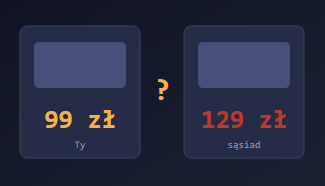 Dynamic and personalised pricing: what is documented (Instacart, Oasis, FTC), what the law says, how shops cheat on Black Friday, plus tips, fun facts and FAQ.
- Sponsored, native, promoted: how to spot an ad disguised as an article
 Sponsored article, native advertising, covert advertising: how they differ, what the law says (UOKiK, DSA, FTC), what real cases looked like and how to spot an ad disguised as an article in 7 steps.
- AI in a judgment: an Italian judge pasted a chatbot conversation. What did the court rule and what’s next?
 An Italian judge and traces of an AI conversation in a judgment. What the court in Cagliari ruled, what Italian law and the AI Act say, and whether it’s ethical. A legal, political and social analysis.
Want to go a step further? Learn to search, verify and know
The blog is just the beginning. The guide “How to Search?” brings the whole method together in one place: practically, step by step, on searching for and verifying information online and in conversations with artificial intelligence.
- 01–05Foundations. Start with them; everything else builds on them.
- 06–13Topic chapters. Work, study, conversations with AI, evaluating sources. Read in any order.
- 14Checklists. Ready-made check questions for when you want to verify a source or an AI answer in a few minutes.
PDF file available for instant download after payment. Secure payments by Stripe (cards, Apple Pay, Google Pay). See guide details
Why it matters so much today
The internet and AI make information easier to access, but they don’t guarantee it’s true. The problem is bigger than it seems.
faster spread of false information online than of true information
greater chance that a false story will be shared
estimated annual cost of disinformation to the global economy
Sources: MIT study (Vosoughi, Roy, Aral), Science 2018 · CHEQ / University of Baltimore report
A three-step method
The whole guide is based on one simple scheme you can apply in any situation.
Search
Phrase your queries effectively in a search engine and in conversations with AI, so you land on credible sources rather than the first result that comes along.
Verify
Check the author, date, context and motivation of the source. Learn to recognise when an AI answer sounds confident but is wrong.
Know
Make decisions based on what you have actually verified, not on what sounded most convincing.
Who this guide is for
In short: for anyone who uses the internet and AI, which today means practically everyone. Here’s a closer look:
This guide is for you if:
- you use the internet every day and want to judge information more accurately;
- you’re a student writing papers and looking for reliable sources;
- at work you look for industry data you need to rely on;
- as a business owner you vet partners and offers;
- you evaluate sources as a doctor or other professional;
- you talk to AI and want to know when not to trust it.
It’s probably not for you if:
- you’re looking for ready-made “hacks” without wanting to understand the basics;
- you’re an advanced OSINT specialist looking for expert-level investigative techniques;
- you don’t plan to change your search and verification habits;
- you expect ready-made answers rather than a method you’ll apply yourself.
Ready to search smarter?
A one-time investment, lifetime access.
- PDF to download straight away
- 14 chapters and checklists
- For computer, tablet and phone
- Invoice on request
Secure payments by Stripe: Visa, Mastercard, American Express, Apple Pay, Google Pay. PDF file for instant download.
Support our initiative
We develop AI Blog as a community project. The more people support us, the more educational materials we can create.
Support us on Buy Me a Coffee
Your support helps us create more guides and materials on searching for information safely.
Buy us a coffee → ▶️Watch us on YouTube
Subscribe to our channel. We share knowledge there about verifying information and using AI safely.
YouTube channel →We’re also open to collaboration: write to us at kontakt@jakszukac.pl.
Frequently asked questions
Didn’t find an answer? Write to us; we reply to every message.
kontakt@jakszukac.plWhat format is the guide in?+
How quickly will I get access after buying?+
What payment methods are available?+
Can I cancel my purchase?+
Will I get an invoice?+
Is my data safe?+
Are the blog articles free?+
Stop guessing, start knowing
Join readers who no longer want to believe the first search result or the first AI answer.